

How To Take Care Of Your Hair Extensions
Last updated on

Just picked up a new set of Milk & Blush hair extensions?
There’s no better confidence boost than the guaranteed good-hair days that come with fresh locks.
One of the most exciting parts of getting new extensions is styling them - creating those voluminous dream looks you couldn’t achieve with your natural hair.
But before you pick up those heat tools and styling products, read our tips on how to take care of your new strands, so you can flaunt them for as long as possible.
These hacks will help you keep your extensions looking and feeling their best. And they’re good rules to follow to keep your own hair healthy, too.
Always Use a Heat Protectant
Just like your natural hair, you need to make sure you’re protecting your hair extensions from heat damage when styling them.
Your extensions don’t get the same supply of natural oils as your hair, so using too much heat can lead to breakage.
Prep your set with a heat protectant every time you style it and don’t use any temperature higher than 185°C.
At Milk & Blush, we love the GHD Bodyguard Heat Protect Spray. It has a lightweight formula that looks after your extensions while making your hair look super shiny.
Store Your Extensions Neatly
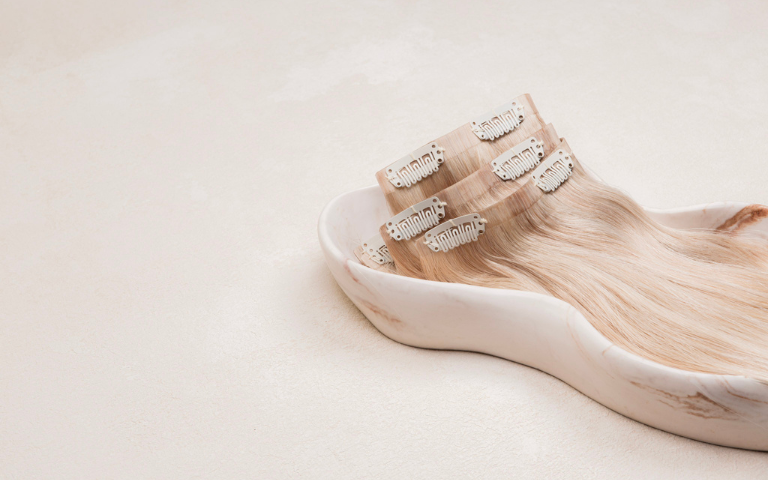
Rather than leaving your hair extensions loose, store them in their original box when you’re not wearing them. This will help to avoid any tangles that can cause damage and knots.
Try rolling them into a loop, placing them in the hair net and into the box.
Or if you’ve curled your extensions – and want them to hold the style – you can use a hair extension or trouser hanger to suspend them, as long as it doesn’t squeeze or press against the clips.
Regularly Brush Your Extensions
It’s important to brush your hair extensions each time you take them out – and before you pop them back in the box – to keep them tangle free. Just make sure to brush from the ends up!
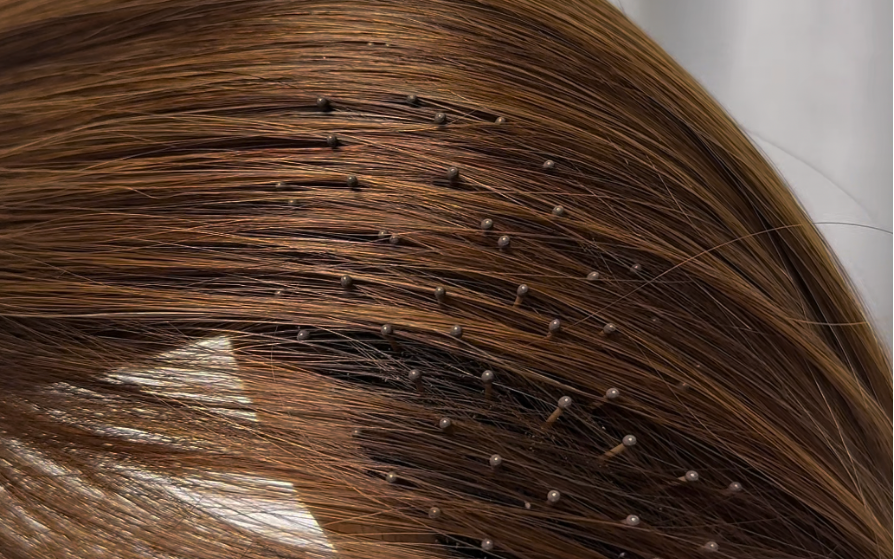
We recommend using a loop brush over your regular hairbrush to avoid causing any damage.
Loop brushes have soft, looped bristles which are super gentle and glide through extensions without snagging or breaking your strands.
Avoid Drying Products
Some hair products can be really drying on extensions, so we’d definitely recommend avoiding them when it comes to styling your hair extensions.
Treatments like salt sprays and dry shampoo, for example, can dry out your set and will create buildup on the hair to make it look dull.
Instead, try texturising sprays, like the Bumble and Bumble Dryspun Texture Spray, for some extra volume. It’s salt free and uses wheat protein to nourish your hair.
Keep Them Dry
One of the biggest myths about clip-in hair extensions is that you need to wash them just as much as your regular hair. But this definitely isn’t true!
In fact, getting your extensions wet can really dry them out. So, we recommend avoiding this if you’re looking to keep your extensions in good condition.
If you only use super lightweight products, you shouldn't get too much product buildup that you feel you need to wash out.
Instead, it’s way better to revive them with some silicone spritz, replenishing any moisture lost to heat styling and totally refreshing your set.
You’ll only need to do this every few months, and it’ll help to soften the hair, detangle the lengths and add loads of shine.
Take Them Out
Going to bed in your extensions is an absolute no-go.
All that tossing and turning can put way too much pressure on the clips, as well as damaging and knotting your natural hair.
You should also take out your extensions when exercising. You won’t want to get them super sweaty, as we recommend washing extensions as little as possible.
These tips are perfect for keeping your extensions healthy and looking just as perfect as when you bought them – and they’re also super easy to follow. So no excuses!
We’d also recommend our top tips for stopping your hair extensions from matting, if you’re looking for extra ways to care for your strands.